
Graz University of Technology's Innovation Aims to Minimize Railway Network Disruptions
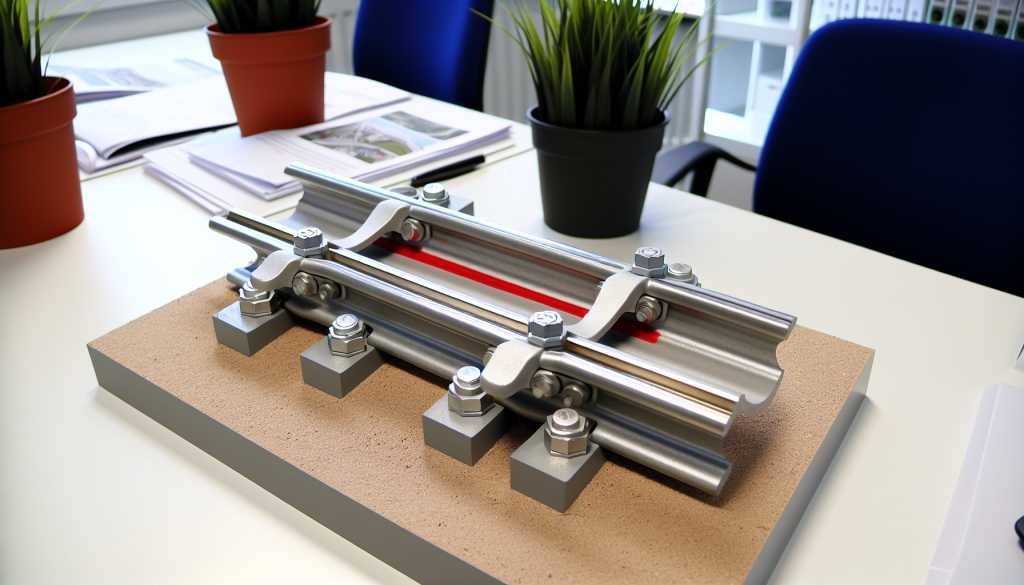
Image:
Sample of an insulated joint on display at the Institute of Railway Infrastructure Design, TU Graz.
Credit: Schoklitsch - TU Graz
Insulated joints might not be widely recognized, but they are essential for railway operations. These joints electrically separate sections of the rail network, allowing systems to detect when trains enter or leave a specific segment. Only once a section is confirmed clear can the next train proceed. Austria currently has about 33,000 of these joints, but on highly trafficked routes, they tend to wear out quickly. In response, Graz University of Technology (TU Graz), in collaboration with ÖBB and Martin Schienentechnik, has created a new prototype. This version incorporates advanced materials and revised designs, promising double the durability and minimizing failures.
A Holistic Approach
“For us, looking at the entire system is vital in a project like this—not just the individual parts,” explains Ferdinand Pospischil of the Institute for Railway Infrastructure Design at TU Graz. “From vehicle loads to the way forces travel through the tracks and into the ground, we consider everything.” TU Graz’s Research Cluster Railway Systems brings together specialists from various disciplines, which allowed them to create a prototype that lasted significantly longer during simulations while maintaining the performance of other track components.
To find a solution, researchers started by locating vulnerabilities in the network using data from specialized track assessment trains. They then measured on-site conditions at damaged joints to analyze how force from the train affected both superstructure and subsoil. With this information, they created a digital twin of the track segment, enabling them to test and improve designs virtually.
Encouraging Early Results
The new joint design was tested under real conditions on the track. Preliminary outcomes indicate that the new design experiences less stress and distributes forces more evenly. This enhancement not only boosts the joint’s durability—potentially twice that of older models—but also improves overall system stability. The result: fewer service disruptions, lower repairs, and a more dependable rail system.
“Insulated joints on frequently used railways suffer a great deal from constant stress caused by passing trains,” says Stefan Marschnig from the Institute of Railway Engineering and Transport Economics at TU Graz. “Our latest research suggests that the improved joints will last significantly longer and cause less wear to surrounding components. At the same time, we ensured that production costs would remain within an acceptable range.”
Method of Research
News article
Subject of Research
Not applicable