Fiji marks milestone as 26th nation to eliminate trachoma as public health threat
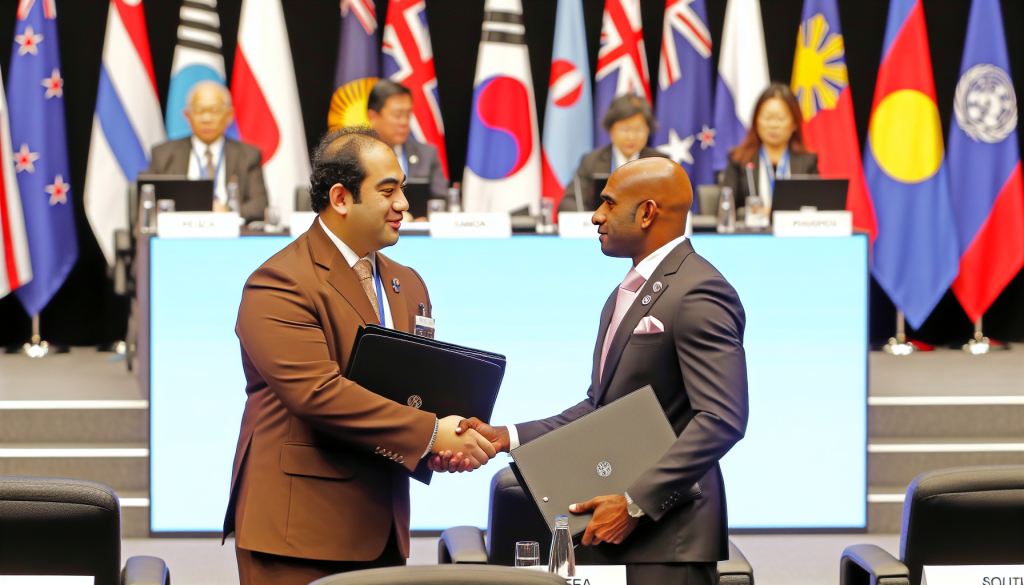
Fiji has reached a major milestone in public health, with the World Health Organization (WHO) officially recognizing the country for eliminating trachoma as a public health issue. Trachoma, a neglected tropical disease and the leading global cause of infectious blindness, has been successfully addressed and no longer threatens public health in Fiji.
This marks Fiji’s first elimination of a neglected tropical disease. The country becomes the 26th worldwide to eliminate trachoma as a public health concern and the 58th nation to eliminate at least one NTD.
“WHO congratulates Fiji and all its partners for achieving this remarkable goal,” said Dr Tedros Adhanom Ghebreyesus, WHO Director-General. “This is a wonderful legacy for future generations in Fiji, as they are spared from the suffering this disease once caused.”
Trachoma is caused by the bacterium Chlamydia trachomatis and is spread through close contact, contaminated objects, and flies exposed to infected discharge from eyes or the nose. Ongoing infections can result in eye damage, turning of the eyelids inward, and eventually, blindness. The disease remains a challenge in under-resourced regions lacking access to clean water and sanitation.
Fiji’s journey to elimination
“Fiji’s accomplishment demonstrates the extraordinary results possible when communities, governments, and partners collaborate toward a shared health goal,” said Dr Saia Ma’u Piukala, WHO Regional Director for the Western Pacific. “This highlights the strength of Pacific leadership and the lasting value of focused health investment. WHO stands by Fiji and other countries in driving forward health improvements so that no one is left behind.”
Decades ago, trachoma was a widespread issue in Fiji, as shown in records from the 1930s and health surveys in the 1950s. By the 1980s, the incidence dropped, with other eye conditions like cataracts becoming more significant causes of vision impairment.
However, in the early 2000s, new evaluations raised concern about trachoma’s resurgence in children. This prompted the Ministry of Health and Medical Services to implement a thorough programme to better understand and confront the issue.
Since 2012, Fiji has carried out numerous assessments, including surveys and diagnostic tests, with international support. These initiatives aimed to define the local impact of trachoma and set it apart from other eye conditions. Combined with school health programmes, sanitation improvements, and community education efforts, these strategies confirmed that trachoma no longer constitutes a public health challenge in Fiji. Systems are also now in place to detect and manage new cases when they emerge.
“Eliminating trachoma is a milestone for health equality in the Pacific,” stated Honourable Dr Ratu Atonio Rabici Lalabalavu, Fiji’s Minister of Health and Medical Services. “This victory is the result of active collaboration among communities, health professionals, and institutions across the nation. As we commemorate this success, we urge continued support from partners to combat other neglected tropical diseases, not just in Fiji but throughout the Pacific region.”
A step toward global NTD goals
Neglected tropical diseases encompass a wide range of health conditions that lead to severe health, social, and economic impacts. These diseases mostly affect the poorest communities in tropical regions. WHO estimates show that they impact more than one billion people worldwide.
The WHO’s Road map for NTDs (2021–2030) outlines objectives to prevent, control, and eliminate 20 NTDs by the end of the decade.
Since 2016, thirteen countries in the Western Pacific Region, which includes 38 nations and territories, have been validated by WHO for eliminating at least one NTD. Six of these – Cambodia, China, the Lao People’s Democratic Republic, Papua New Guinea, Vanuatu, and Viet Nam – have also achieved the elimination of trachoma as a public health problem. Fiji’s success builds on this regional progress.
WHO remains dedicated to helping nations eradicate trachoma and other neglected tropical diseases, contributing to better health and well-being for vulnerable populations around the world.