Scientists uncover “bacterial constipation,” a newly identified illness triggered by gut-dehydrating microbes
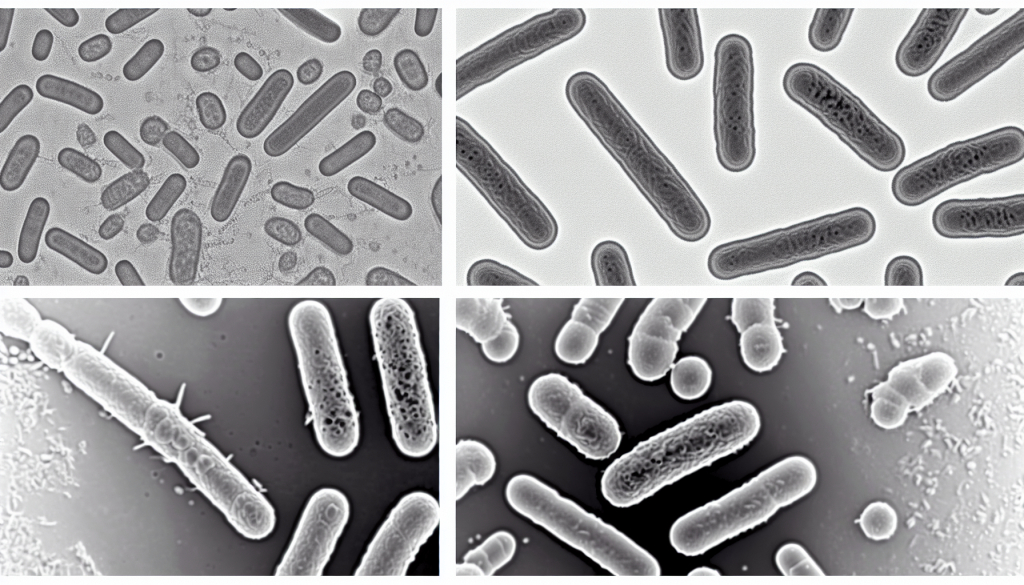
Image:
Electron microscope images of two bacteria linked to bacterial constipation. Left: Bacteroides thetaiotaomicron (Top: Transmission Electron Microscopy (TEM); Bottom: Scanning Electron Microscopy (SEM)). Right: Akkermansia muciniphila (Top: TEM; Bottom: SEM). These microbes act sequentially to break down the intestinal mucus layer that keeps stool soft and hydrated.
Credit: Tomonari Hamaguchi, Nagoya University
Researchers at Nagoya University in Japan have identified a pair of gut bacteria that cooperate in a way that promotes chronic constipation. The two microbes—Akkermansia muciniphila and Bacteroides thetaiotaomicron—gradually erode the mucus barrier lining the colon, a layer essential for lubrication and stool moisture. When this protective coating is excessively degraded, feces become dry and difficult to pass. Published in Gut Microbes, the findings help explain why conventional treatments fail to relieve symptoms for many individuals living with long-term constipation.
The researchers also observed that people with Parkinson’s disease, who often experience constipation decades before motor symptoms appear, tend to harbor higher levels of these mucus-degrading bacteria. Constipation in Parkinson’s has largely been attributed to nerve damage affecting gut movement. However, the new results indicate that microbial activity in the intestine may significantly contribute to these early digestive problems.
Why “mucin” is essential for healthy digestion
Constipation is one of the most widespread gastrointestinal complaints. It is commonly thought to result from sluggish intestinal movement, where the bowels fail to push waste forward efficiently. Yet this explanation does not account for all cases.
Some individuals develop chronic idiopathic constipation (CIC), meaning no clear cause can be identified. Patients with Parkinson’s disease also frequently endure severe constipation that resists standard therapies, although their condition is classified separately from CIC. In many cases, digestive symptoms appear 20 to 30 years before tremors or other motor difficulties, leaving the underlying reason uncertain until now.
Rather than concentrating solely on nerve signaling and muscle contractions in the gut, the research team examined colonic mucin—a gel-like substance forming a protective layer along the large intestine and present within stool. Mucin preserves moisture, allows stool to move smoothly, and shields the intestinal lining from direct bacterial contact.
The study revealed a two-step bacterial process that dismantles this barrier. First, B. thetaiotaomicron produces enzymes that strip away sulfate groups protecting mucin molecules. Then, A. muciniphila breaks down and consumes the now-exposed mucin.
Under normal conditions, sulfate groups attached to mucin help prevent bacterial degradation. When too much mucin is lost, stool dries out and hardens, leading to constipation. Because the core issue is depletion of mucin rather than impaired intestinal motion, common laxatives and medications designed to stimulate bowel movement often provide little relief.
A potential new direction for treatment
To confirm their findings, the scientists genetically altered B. thetaiotaomicron so it could no longer produce the sulfatase enzyme responsible for removing sulfate groups from mucin.
When these modified bacteria were introduced into germ-free mice alongside A. muciniphila, the animals did not develop constipation. The mucin layer remained intact and continued to protect the intestine.
This experiment demonstrated that inhibiting the sulfatase enzyme effectively prevents mucin breakdown. The researchers suggest that therapies targeting this enzyme could offer a new way to treat constipation driven by bacterial activity.
For the many people affected by persistent, treatment-resistant constipation—including those with Parkinson’s disease—these findings open the door to therapies aimed at the microbial root of the problem rather than simply managing symptoms.
Journal
Gut Microbes
DOI
10.1080/19490976.2025.2596809
Method of Research
Experimental study
Subject of Research
Animals
Article Title
Mucin-degrading intestinal commensal bacteria cause constipation
Article Publication Date
19-Feb-2026