
New camel-derived antimicrobial peptides show potential against antibiotic-resistant bacteria
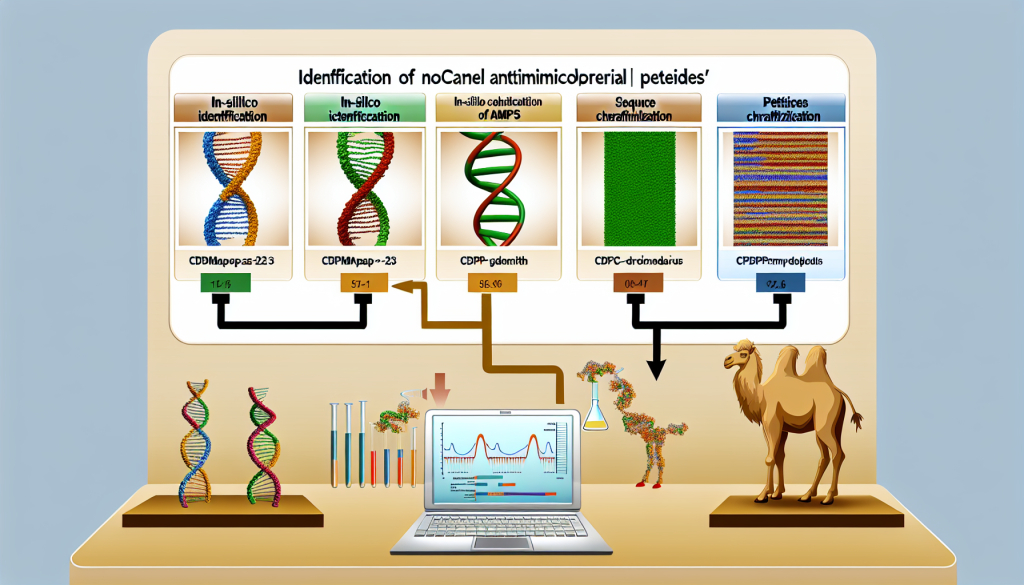
image:
Graphic titled “Discovery of Novel Camel Antimicrobial Peptides” outlining five key stages. Step 1: Computational identification of antimicrobial peptides from the camel genome. Step 2: In-silico structural characterization of three peptides—CdPMAP-23, CdPG-3, and CdCATH. Step 3: Laboratory synthesis of the selected peptides. Step 4: In-vitro antimicrobial testing demonstrating suppressed bacterial growth. Step 5: In-vitro hemolysis assessment showing minimal damage to red blood cells.
Credit: BioRender. Al adwani, S. (2026).
February 16, 2026—As antimicrobial resistance continues to escalate worldwide and the pipeline for new antibiotics remains limited, scientists at Sultan Qaboos University have identified three previously unreported antimicrobial peptides (AMPs) derived from dromedary camels. These compounds show promising activity against multidrug-resistant bacteria and may serve as alternatives to standard antibiotic treatments.
The findings, published in Frontiers in Immunology (Volume 17, 21 January 2026), integrate computational screening with laboratory-based validation. The research team performed colony-forming unit assays, membrane permeability analyses, and electron microscopy studies on bacterial strains including MRSA and multidrug-resistant E. coli.
Two of the peptides, CdPG-3 and CdCATH, exhibited potent antibacterial effects against both Gram-positive and Gram-negative organisms. They disrupted bacterial membranes, leading to leakage of cellular contents, while maintaining low toxicity toward camel and human red blood cells at lower concentrations.
The strong innate immune defenses of camels, particularly their cathelicidin-like AMPs, may contribute to their resilience against infections that commonly affect other ruminants. According to the researchers, these results provide a basis for developing camel-derived AMPs as therapeutic agents targeting resistant pathogens.
Unlike conventional antibiotics, which often lose effectiveness due to specific genetic mutations in bacteria, AMPs typically act by broadly disturbing microbial membranes, making resistance development less likely. The low hemolytic activity observed in this study further supports the potential safety of these peptides for continued pharmaceutical development.
Future investigations will focus on refining and optimizing these camel-derived AMPs for possible clinical applications, drawing on Oman’s significant camel resources.
Journal
Frontiers in Immunology
DOI
10.3389/fimmu.2026.1745714
Method of Research
Experimental study
Subject of Research
Animals
Article Title
Identification and characterization of novel antimicrobial peptides from Camelus dromedarius: a combined bioinformatics and experimental study
Article Publication Date
22-Jan-2026