
Researchers uncover consistent regional patterns in fruit fly survival tactics
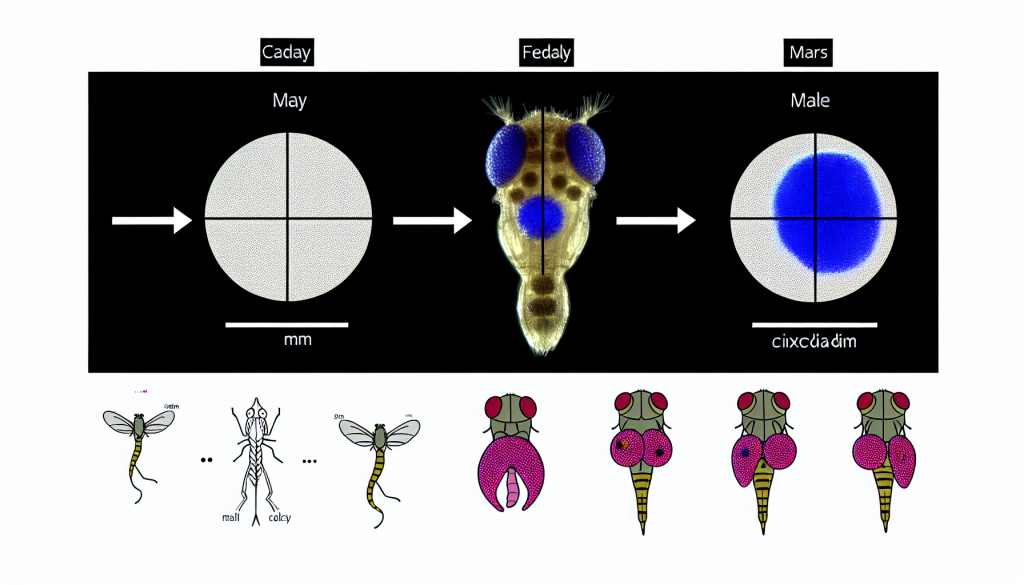
Image:
Measurement of dormant reproductive development in male and female fruit flies. Researchers examined various Drosophila triauraria strains to study delays in reproductive organ formation.
Credit: Tokyo Metropolitan University
Tokyo, Japan – Scientists from Tokyo Metropolitan University have been exploring how fruit flies adjust their growth when faced with changes in their environment, a process known as diapause. By examining flies from different regions of Japan, they discovered that the likelihood of entering reproductive diapause changes gradually depending on local environmental conditions. Genetic analysis pointed to the timeless (tim) gene as a key factor, contributing to growing evidence linking developmental delays to genes tied to the body's internal clock.
Many animals have evolved different ways to survive changing environmental conditions. One of the most familiar is hibernation, where some species dramatically reduce their metabolic rate to endure months of limited resources. Similarly, some insects and arthropods use diapause, a strategy that involves temporarily pausing their development.
Reproductive diapause, in which an organism postpones the development of its reproductive system, is particularly useful for surviving tough conditions. While it’s known that environmental cues influence diapause in insects, the precise ways these traits are inherited and regulated at the genetic level remain a mystery.
In a new study led by Professor Aya Takahashi, the team at Tokyo Metropolitan University looked closely at how fruit flies begin reproductive diapause based on changes in temperature and day length. Their research centered on Drosophila triauraria, a species found widely across Japan’s varied climate zones. Earlier findings had shown that strains from northern areas were quite responsive to shorter daylight hours, unlike southern strains that did not stop reproducing under the same conditions.
By analyzing flies from different regions, the team noted a clear, gradual shift in sensitivity to diapause influenced by both air temperature and daylight duration, in both males and females. Studies like this are rare, especially those including male subjects, and offer valuable comparisons on how both sexes handle environmental stress. They even found early signs that males and females may adapt differently in mid-to-high latitude areas, raising questions about gender-specific life cycle adjustments in these regions.
To uncover the genetic causes behind these trends, researchers sequenced genes from 21 distinct populations and applied a "monophyletic window" method. This technique offers more stringent genetic comparisons than standard methods and works well even with smaller datasets. Their analysis revealed that changes in how much of the timeless (tim) gene is expressed were closely tied to differences in female diapause response. This supports existing research pointing to internal biological rhythms as a significant factor in regulating diapause.
The research marks a major advance in our knowledge of how animals adapt developmentally to their surroundings and could pave the way for new studies on diapause in other species.
This research was funded by JSPS KAKENHI Grant Numbers 23K27221, 24KJ0181, 22H05073, and 22KJ2552.
Journal
Molecular Ecology
DOI
10.1111/mec.70251
Article Title
Geographic Divergence and the Genomic Basis of Reproductive Diapause in Drosophila triauraria
Article Publication Date
30-Jan-2026