Nations come together at WHA79 to strengthen refugee and migrant health through more resilient national systems
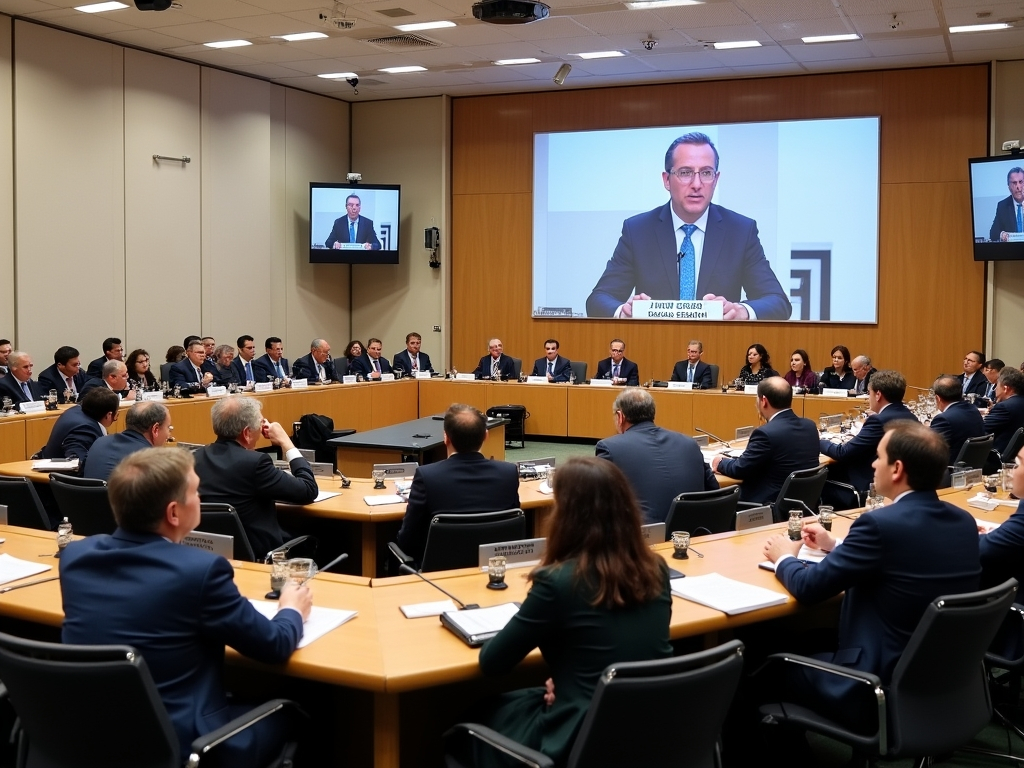
During a high-level side event held alongside the Seventy-ninth World Health Assembly (WHA79), governments and partners renewed their commitment to advancing refugee and migrant health by strengthening inclusive national health systems and exchanging practical experiences to turn global pledges into measurable results. Organized by the Government of Spain, co-sponsored by Brazil, Colombia, Egypt and Nepal, and supported by the World Health Organization (WHO), the session concentrated on transforming policy commitments into concrete strategies that expand access to health services.
“Promoting equity for migrants and refugees begins with acknowledging their right to health,” stated Javier Padilla, Spain’s Secretary of State for Health. “In Spain, everyone residing in the country, irrespective of administrative status, has the right to health care under equal conditions. This approach enables us to create stronger, fairer health systems and achieve better health outcomes for society as a whole.”
As global mobility continues to influence health systems, participants underscored the importance of building adaptable systems and putting inclusive policies into operation. Although many nations have incorporated refugee and migrant health into their national strategies, fair and consistent access to services—particularly for those in vulnerable circumstances—remains uneven. Refugees and migrants actively contribute to economies, communities and health systems; ensuring their inclusion is vital for achieving universal health coverage (UHC) and reinforcing system resilience.
“The debate has shifted from whether migrant and refugee health should be included to how we put commitments into practice,” said Dr Santino Severoni, Head of WHO’s Special Initiative on Health and Migration. “Achieving this demands improved data and evidence, long-term partnerships and a collective determination to ensure health systems serve everyone, everywhere.”
From policy to impact
Country representatives and partners shared insights into how they are translating commitments into expanded access to health services for refugees and migrants:
• Colombia broadened access within its national health system in areas with high mobility by regularizing migrant populations, incorporating them into public health programmes, expanding insurance coverage, and prioritizing mental health, psychosocial support and social protection initiatives.
• Egypt showcased rights-based and inclusive policies that guarantee refugees, migrants and asylum-seekers equal access to health services. The country delivers hundreds of thousands of primary care services each year, including targeted screenings and treatments, supported by updated legislation, policies and governance frameworks.
• Nepal reinforced governance and coordination by advancing migrant health policies and enhancing screening and referral systems for returning migrant workers. The country has also piloted information systems designed to strengthen health data collection and ensure continuity of care.
• Spain implemented reforms to make its health system more inclusive by eliminating administrative barriers, guaranteeing access regardless of migration status, strengthening cross-sector collaboration, and promoting international knowledge exchange, including hosting the Seventh WHO Global School on Refugee and Migrant Health.
• Brazil emphasized integrated and intersectoral approaches that connect health, social protection and labour policies. Efforts include community-based primary health care services and large-scale humanitarian responses supporting displaced populations.
• The International Organization for Migration (IOM) highlighted people-centred service delivery models that combine primary health care, mental health services and cross-sectoral support, while addressing fragmentation between systems.
• The Office of the United Nations High Commissioner for Refugees (UNHCR) stressed the importance of stronger partnerships, including engagement with the private sector, to promote refugee inclusion within national systems instead of establishing parallel structures. It also emphasized expanding opportunities for refugee self-reliance, in line with the “50 by 35” vision to reduce dependency on humanitarian assistance by half by 2035.
• WHO outlined its collaboration with Member States under the Global Action Plan on Promoting the Health of Refugees and Migrants (2019–2030), focusing on improving data, monitoring and evidence systems to track progress, identify gaps and foster more inclusive and resilient health systems.
• The International Federation of Red Cross and Red Crescent Societies (IFRC) underlined the value of community trust, locally led initiatives and cross-border cooperation to ensure services respond to real needs while remaining embedded in national frameworks.
• A representative from the Danish Youth Council called for stronger participation of migrants and refugees in decision-making processes, pointing to the effects of stigma, limited representation and gaps between policy design and lived experience, and highlighting the importance of youth-led evidence and community engagement.
Shared priorities: scaling inclusive health systems
Participants highlighted the need to address social determinants of health, remove administrative obstacles and ensure that financing mechanisms adapt to changing demands. Several common priorities were identified:
• accelerating the conversion of policy commitments into scalable and sustainable services;
• embedding inclusion within primary health care systems and safeguarding continuity of care;
• strengthening monitoring frameworks and expanding the use of disaggregated data;
• improving alignment between health, social and migration sectors, while bridging humanitarian and development responses; and
• increasing the engagement of refugees, migrants and young people in both policy development and service delivery.
The side event reinforced the value of sustained cooperation among governments, international agencies and communities to advance refugee and migrant health. As patterns of mobility become more complex, exchanging practical experiences and reinforcing partnerships will be critical to expanding inclusive and effective health solutions.
Outcomes from discussions at WHA79 are expected to guide ongoing national and global initiatives aimed at strengthening inclusive health systems and accelerating progress toward universal health coverage, ensuring that no one is left behind.