One in four individuals worldwide remains without access to safe drinking water – WHO and UNICEF
In recognition of World Water Week 2025, a newly released report brings attention to ongoing disparities, as many vulnerable populations continue to be neglected.
Although there has been progress in the last ten years, billions of individuals around the globe still do not have access to fundamental water, sanitation, and hygiene services. This lack exposes them to increased health risks and social marginalization.
The report, titled Progress on Household Drinking Water and Sanitation 2000–2024: Special Focus on Inequalities, jointly released by WHO and UNICEF, outlines both achievements and shortfalls. It reveals that the greatest challenges remain among people in low-income nations, rural communities, fragile regions, children, and minority and Indigenous populations.
Ten key findings from the report include:
• Since 2015, access to safe drinking water has improved, yet 2.1 billion people—one in four—still lack this service. Among them, 106 million rely on untreated surface water.
• Around 3.4 billion people are without basic sanitation, and 354 million continue to defecate in the open.
• Approximately 1.7 billion people lack basic hygiene at home, with 611 million having no facilities at all.
• In the world’s least developed countries, residents are more than twice as likely to be without basic water and sanitation, and over three times more likely to lack hygiene services.
• In areas affected by instability, safe drinking water access is 38 percentage points lower compared to more stable regions, revealing significant inequality.
• Rural communities, though benefiting from improvements, remain behind. Between 2015 and 2024, safely managed water coverage increased from 50% to 60%, and hygiene services from 52% to 71%. Urban areas, however, show little to no improvement in this time frame.
• Survey data from 70 nations show that while most women and adolescent girls have menstrual products and private spaces to manage hygiene, many do not have enough supplies to change as needed.
• Teen girls between the ages of 15 and 19 are less likely than adult women to take part in daily activities, including school and work, during menstruation.
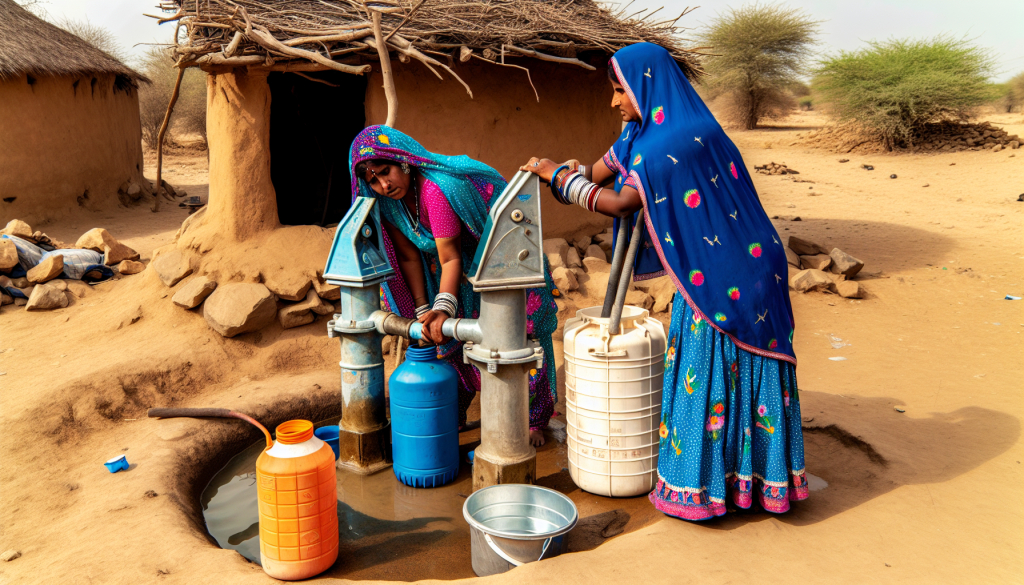
• In most surveyed countries, women and girls remain the primary individuals responsible for collecting water. In many sub-Saharan and South Asian regions, this task takes more than 30 minutes each day.
• With just five years remaining to meet the Sustainable Development Goals, significant acceleration is needed to eliminate open defecation and ensure universal access to essential water and sanitation services. Achieving comprehensive coverage of safely managed services appears increasingly difficult at the current pace.
“Water, sanitation, and hygiene are not luxuries—they are basic human rights,” said Dr. Ruediger Krech, Acting Director of Environment, Climate Change and Health at the World Health Organization. “We must intensify our efforts, especially for marginalized groups, to uphold our commitment to achieving the Sustainable Development Goals.”
“When children lack adequate water, sanitation, and hygiene, their well-being and opportunities suffer,” added Cecilia Scharp, Director of WASH at UNICEF. “Girls face unique challenges, from carrying water to managing menstruation. At our current rate, the vision of clean water and proper hygiene for every child is moving farther away. We must act more decisively to reach those in greatest need.”
The latest edition of this progress report has been compiled by the WHO/UNICEF Joint Monitoring Programme for Water Supply, Sanitation and Hygiene (JMP). Spanning from 2000 to 2024, the report updates worldwide, regional, and national statistics and includes expanded insights into menstrual health across 70 countries, showing that all income groups face challenges.
This report is launched alongside World Water Week, taking place from August 24 to 28, 2025. The event serves as a prominent platform for global water issues, uniting partners from diverse fields to drive action on shared objectives.
____________________________
Definitions:
Safely managed drinking water and sanitation: Drinking water must be available on-site, free of contaminants, and consistently accessible when needed. Sanitation involves hygienic facilities where waste is properly treated and disposed of.
Fragile contexts: According to the OECD, fragility refers to situations where high risk intersects with limited capacity among states or communities to mitigate those risks. This may occur across six dimensions: economic, environmental, human, political, security, and societal.
About the JMP: The WHO/UNICEF Joint Monitoring Programme was founded in 1990 and has been tracking water, sanitation, and hygiene data for 35 years. JMP oversees the monitoring of Sustainable Development Goal targets 1.4, 6.1, and 6.2, aiming for universal access to safe water, sanitation, and hygiene, and the end of open defecation by 2030.
Media Contact:
WHO: [email protected]
UNICEF: Iris Bano Romero | UNICEF New York | +1 9178048093 | [email protected]