Many nations advance toward universal health coverage, yet significant obstacles persist, says WHO–World Bank report
Since the year 2000, countries across all regions and income levels have taken steps to improve access to health services and reduce financial strain caused by healthcare expenses, according to a new joint report from the World Health Organization (WHO) and the World Bank Group. These improvements are essential components of achieving universal health coverage (UHC), a global goal aimed at ensuring everyone can receive the health care they need without suffering economic hardship by 2030.
The 2025 edition of the UHC Global Monitoring Report highlights that the Service Coverage Index (SCI) increased from 54 in 2000 to 71 in 2023. At the same time, the percentage of people facing financial difficulties due to out-of-pocket (OOP) health spending fell from 34% in 2000 to 26% in 2022.
Despite these gains, the report stresses that the most economically disadvantaged populations continue to bear the brunt of unaffordable health care. About 1.6 billion people have been driven into or deeper into poverty because of health costs. Overall, approximately 4.6 billion people still lack access to essential health services, and 2.1 billion face financial pressure when seeking care.
"Universal health coverage embodies the right to health, but this right remains distant for billions who still cannot afford or access basic health services," stated Dr Tedros Adhanom Ghebreyesus, Director-General of WHO. “In a time of significant cuts in global aid, countries must prioritize investments in their health systems to safeguard health and economic stability. WHO is working to assist them in this effort.”
Financial hardship related to health is characterized by households spending more than 40% of their available income on OOP health expenses. Medication costs are a primary contributor: in most countries with data, medicines account for over 55% of OOP health spending. Among poorer populations, this figure rises — with as much as 60% of their health-related expenditure going towards medications, often at the expense of other basic needs.
Although poorer communities are most affected, rising health-related expenses are also impacting better-off individuals, particularly in middle-income nations where more people are allocating significant portions of their income to health care.
If improvements do not accelerate, universal service coverage without financial burden may remain unachieved. By 2030, the global SCI is expected to reach only 74 out of 100, with roughly one in four people still struggling to afford care, concluding the Sustainable Development Goals (SDG) period with gaps unclosed.
Encouraging advances in low-income nations, but challenges persist
Though progress continues, the rate has slowed since 2015. Only a third of countries have made simultaneous improvements in both service access and financial protection. All regions have seen progress in service coverage, but only Africa, South-East Asia, and the Western Pacific have also seen a decline in financial strain. Low-income countries have made the fastest improvements in both areas but still face significant shortfalls.
Increases in service coverage have largely benefited from initiatives targeting infectious diseases. Progress on noncommunicable diseases (NCDs) has been steady, while areas such as maternal and child health have improved more modestly.
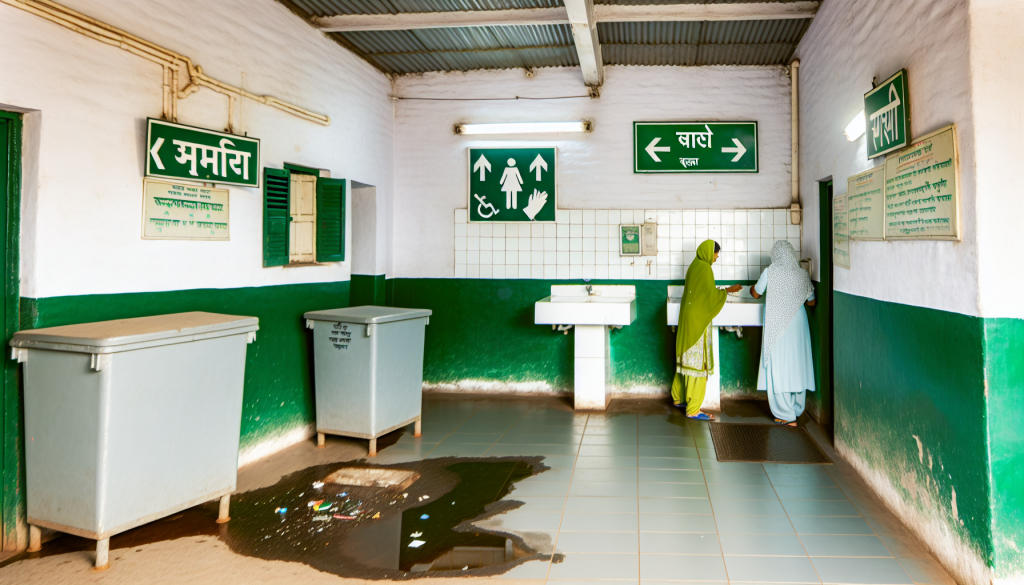
Better access to sanitation has contributed to enhanced service delivery. At the same time, economic growth, increased incomes, and stronger safety nets have helped reduce poverty levels, particularly in poorer countries. However, health care costs remain a persistent challenge for those already living on the margins.
Widening disparities remain a serious concern
Despite the overall progress, inequalities remain stark and in some cases are widening. By 2022, three out of every four people among the poorest groups faced financial difficulties due to health costs, while fewer than one in 25 of the wealthiest did.
Women, rural residents, and those with lower education levels continue to encounter greater obstacles in obtaining necessary health care. While the disparity between the wealthiest and poorest women shrank slightly over the past ten years — from 38 to 33 percentage points — a significant gap remains. Even in regions like Europe, considered high-performing, vulnerable groups such as those living in poverty or with disabilities often face unmet health care needs.
Due to limitations in data collection, these findings may underrepresent health coverage gaps for certain marginalized populations, such as displaced individuals and those in informal settlements.
Steps needed as 2030 approaches
Achieving universal health coverage by 2030 is essential to upholding the right to health. With only five years left in the SDG timeline, the report calls for urgent measures. It emphasizes the importance of political will and outlines six key areas for action:
• Provide free essential health services at the point of care for people in poverty and vulnerable groups;
• Increase public investment in healthcare systems;
• Address the high cost of medicines driving out-of-pocket spending;
• Improve access to services for noncommunicable diseases as the global disease burden shifts;
• Strengthen primary care to increase fairness and system efficiency; and
• Employ cross-sector approaches, recognizing that health outcomes are influenced by factors beyond health services alone.
Editor’s note
This edition of the UHC Global Monitoring Report 2025 marks the first assessment using updated Sustainable Development Goal indicators for service coverage (SDG 3.8.1) and financial hardship (SDG 3.8.2). These revised indicators helped track global and regional service coverage trends from 2000 to 2023 across 195 regions, and financial hardship trends from 2000 to 2022 in 168 countries.
The report is being presented at the UHC High-Level Forum, co-hosted by the Government of Japan, WHO, and the World Bank Group in Tokyo. During this event, WHO and the World Bank are also launching the UHC Knowledge Hub in Tokyo — a platform supported by the Japanese government aimed at helping health ministries and finance departments strengthen health financing systems.
In addition, WHO, the World Bank Group, UHC2030, and the Joint Learning Network for Universal Health Coverage will host a technical webinar titled “Tracking Universal Health Coverage: 2025 Global Monitoring Report” on 8 December 2025.