Study of ancient plankton offers lasting optimism for low-oxygen seas
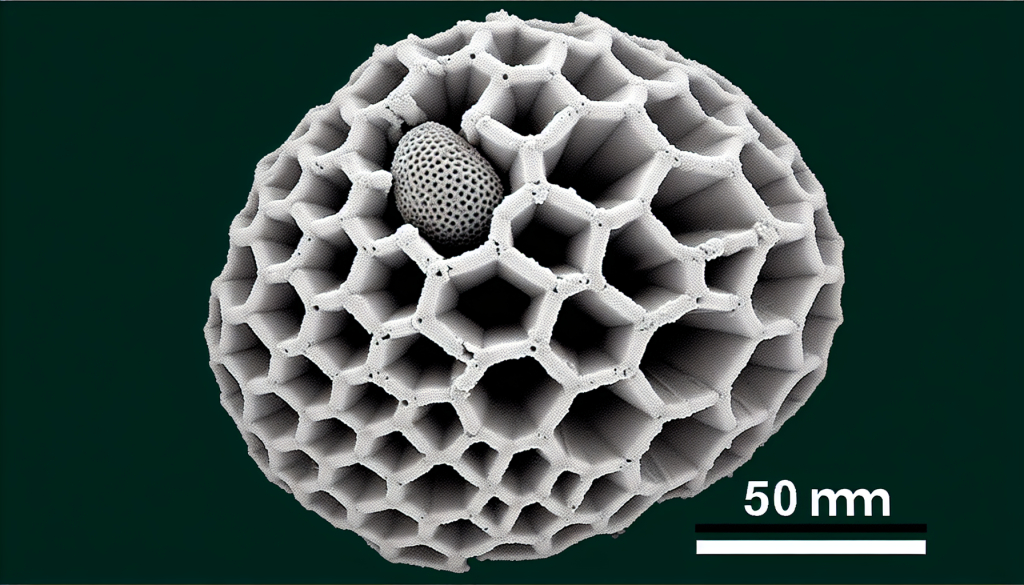
Image:
Scanning electron microscope visualization of fossilized planktonic foraminifera.
Image Credit: Anya Hess
Key Discoveries
- Oxygen levels in the Arabian Sea were significantly higher 16 million years ago compared to present, even during a warmer global climate.
- Regional climate systems like monsoons, water movement, and sea pathways affect how oxygen circulates in the ocean, adding layers of complexity to future predictions.
- In the long-term geological future, ocean oxygen content may rebound—with uncertain impacts on marine ecosystems.
A recent investigation indicates that the world’s oxygen-starved oceans might gradually regain oxygen in the distant future, despite ongoing global warming trends.
Scientists from the University of Southampton in the UK and Rutgers University in the US studied microfossils from the Arabian Sea. Their analysis discovered that 16 million years ago, during a period of intense warming, the Arabian Sea contained more oxygen than today. Significant oxygen depletion actually occurred four million years later when global temperatures began cooling.
They also found that this region behaves differently compared to similar low-oxygen zones in the Pacific Ocean. This is likely due to dynamics like wind patterns, current flows, and contributions from adjacent seas, which might have delayed oxygen loss.
The results appear in the journal Communications Earth & Environment.
Dr. Alexandra Auderset, co-lead author from the University of Southampton and formerly of the Max Planck Institute, emphasized the importance of this research: “Oxygen in the oceans supports marine ecosystems and promotes biodiversity. However, over the past fifty years, oxygen concentrations worldwide have dropped by about 2% each decade due to rising temperatures.”
She continued: “The Miocene Climatic Optimum (MCO)—a warm period from around 17 to 14 million years ago—offers a useful comparison to projected climates after the year 2100. By examining oxygen levels from that time, we can better anticipate what may happen in the future.”
The researchers studied foraminifera, microscopic plankton whose chemical makeup provides clues about past oxygen levels. These tiny fossils were sourced from sediment cores collected by the Ocean Drilling Program.
The data revealed the presence of an Oxygen Minimum Zone (OMZ) in the Arabian Sea from around 19 to 12 million years ago, with oxygen levels under 100 micromoles per kilogram of water.
However, these levels weren’t low enough to trigger denitrification—a process where nitrogen is released from the ocean into the atmosphere—which is happening in the Arabian Sea today. This extreme low-oxygen state developed only after 12 million years ago.
“Today, some parts of the Arabian Sea are nearly devoid of oxygen and can barely sustain marine life,” said Dr. Auderset. “But during the MCO, even with similar temperature scenarios, oxygen levels were healthier and could support a more diverse range of species.”
Dr. Anya Hess, also a co-lead author and affiliated with George Mason University, noted: “The MCO serves as our best historical parallel for extreme warming scenarios likely after 2100 if emissions remain high. Previously, we showed the eastern tropical Pacific was well-oxygenated during this time—which differs from the current trend toward oxygen loss.”
She added, “The Arabian Sea was likewise better oxygenated during the MCO, although its decline in oxygen came later and was not as delayed as in the Pacific region.”
Dr. Auderset concluded: “Our study suggests that ongoing deoxygenation is influenced heavily by local oceanographic factors. Global climate models that don’t factor in these regional variables may not fully capture what’s actually happening.”
“Ultimately, the ocean’s reaction to climate change isn’t straightforward. Our findings emphasize the need for flexibility in monitoring and adapting to evolving ocean conditions.”
Journal
Communications Earth & Environment
DOI
10.1038/s43247-025-03112-4
Method of Research
Computational simulation and modeling
Subject of Research
Not applicable
Article Title
Contrasting evolution of the Arabian Sea and Pacific Ocean oxygen minimum zones during the Miocene
Article Publication Date
January 16, 2026